Workforce Development
Workforce development should do more than prepare people for jobs. It should help people rebuild stability, confidence, and future possibility.
Dr. Annise Mabry’s workforce development initiatives are rooted in trauma-informed practice, restoration-centered leadership, and practical pathways designed to help individuals move from survival mode into sustainable opportunity.
Beyond Traditional Workforce Conversations
Too many workforce programs are built around compliance instead of restoration.
They focus on short-term placement without addressing the realities many people are carrying: educational disruption, instability, trauma, exclusion, poverty, justice involvement, burnout, lack of support systems, or years spent surviving environments that limited access to opportunity.
This work approaches workforce development differently.
The goal is not simply employment.
The goal is stability, dignity, confidence, long-term growth, and sustainable pathways forward.
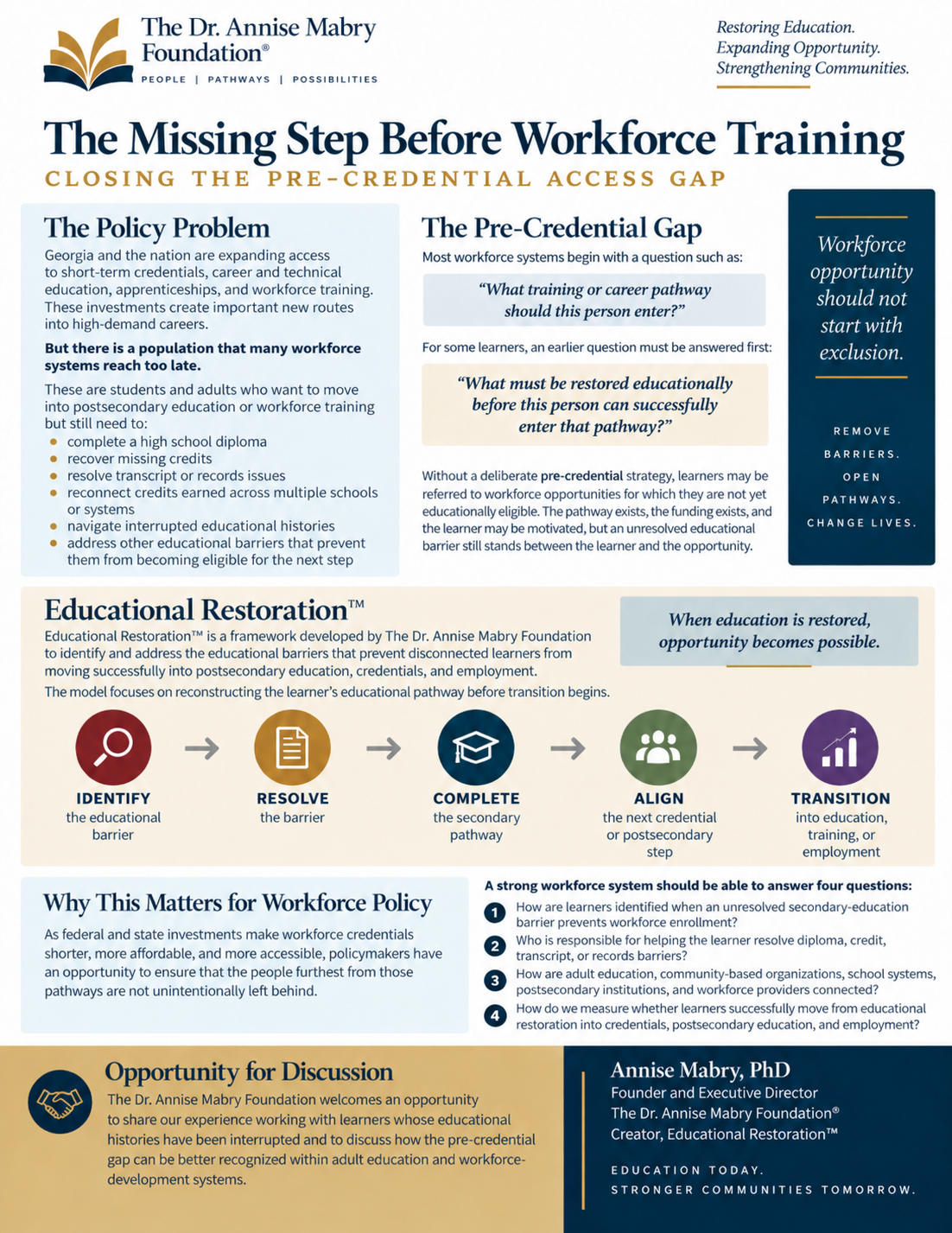
A Restoration-Centered Workforce Model
This approach recognizes that workforce readiness is often connected to emotional safety, educational access, confidence, consistency, and the ability to envision a future beyond survival.
Dr. Mabry’s workforce development philosophy combines:
- Trauma-informed practice
- Educational restoration
- Workforce readiness
- Life skills development
- Community partnership
- Long-term pathway thinking
- Restoration-centered support systems
- Career exposure and practical implementation
Areas of Focus
Workforce development initiatives connected to this work may include:
- Job readiness and employability skills
- Career exploration pathways
- Hospitality and barista training
- Diploma completion pathways
- Workforce support for opportunity youth
- Community partnership initiatives
- Workforce leadership development
- Trauma-informed workforce models
- Soft skills and professional communication
- Real-world career exposure opportunities
Communities & Populations Served
This work has supported:
- Opportunity youth
- Justice-impacted individuals
- Rural communities
- Students seeking alternative diploma pathways
- Young adults navigating educational disruption
- LGBTQ youth and young adults
- Individuals rebuilding after instability or exclusion
- People seeking workforce pathways rooted in dignity and structure
Workforce Development as Restoration
Employment impacts more than income.
It impacts:
- confidence
- stability
- identity
- housing
- emotional well being
- family systems
- long-term opportunity
- community safety
- future decision-making
When workforce development is approached with dignity and structure, it becomes more than job training. It becomes a pathway toward restoration.
Collaborative & Community-Based Work
This work often intersects with:
- educational initiatives
- nonprofit partnerships
- restorative programming
- youth development
- reentry support
- community leadership
- trauma-informed systems work
- rural community development
The focus is not isolated programming.
It is building pathways that help communities strengthen long-term outcomes.
Signature Philosophy
People are more likely to thrive when systems respond to their humanity instead of only their deficits.
Workforce development should create environments where individuals can build capacity without carrying shame for where they started.
Building Pathways Beyond Survival
Whether through workforce initiatives, educational pathways, community partnerships, or restoration-centered leadership conversations, this work exists to help people reconnect with opportunity, stability, and future possibility.